EYES ON EVERY FOOT.
Remote drilling ops for independent E&Ps
About ROCshop
ROCshop brings enterprise-level remote operations to E&P operators who don’t have that capability in-house. We give you the directional oversight of a major operator’s Remote Operations Center without the cost of building one. A dedicated remote pod watches several rigs at once, 24/7. It’s staffed by operator-level directional supervisors and geosteerers on 12-hour shifts, so every rig gets the same oversight no matter which service company is on location.
ROCshop was founded by Michael Hicks, who has 19 years in directional drilling. He spent five of those years in ExxonMobil’s Remote Operations Center, making the steering decisions for six rigs at once. ROCshop brings that same model to independent operators. We focus on geosteering to keep wells in the target zone, anti-collision oversight, directional support, and drilling efficiency that protects tool life and cuts days on the well. We work with your existing real-time data, and every shift handover is written down so nothing gets lost between crews.
Our Services
01 · Recon
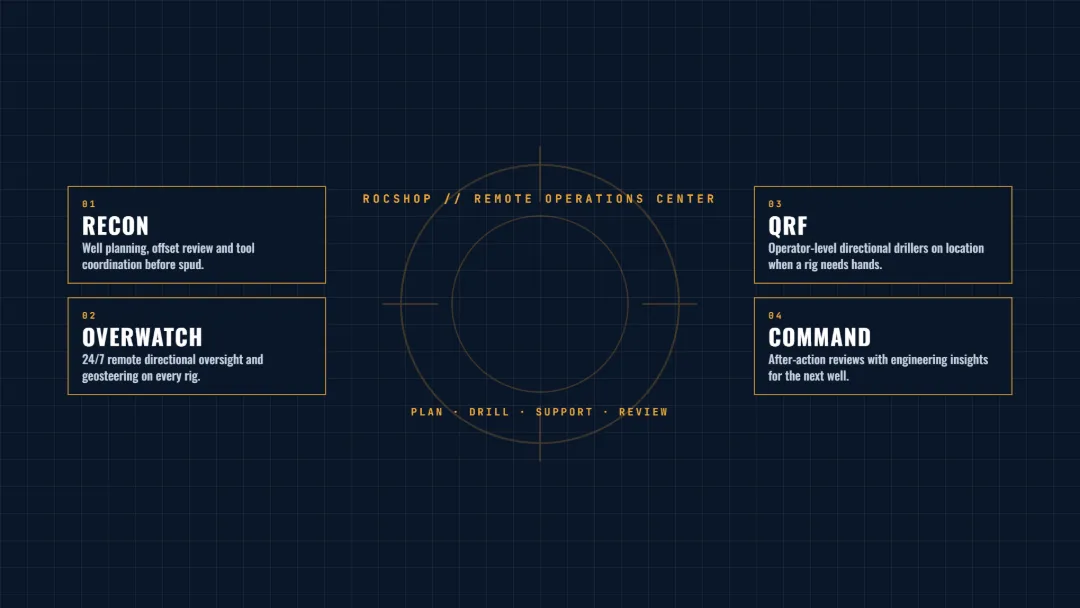
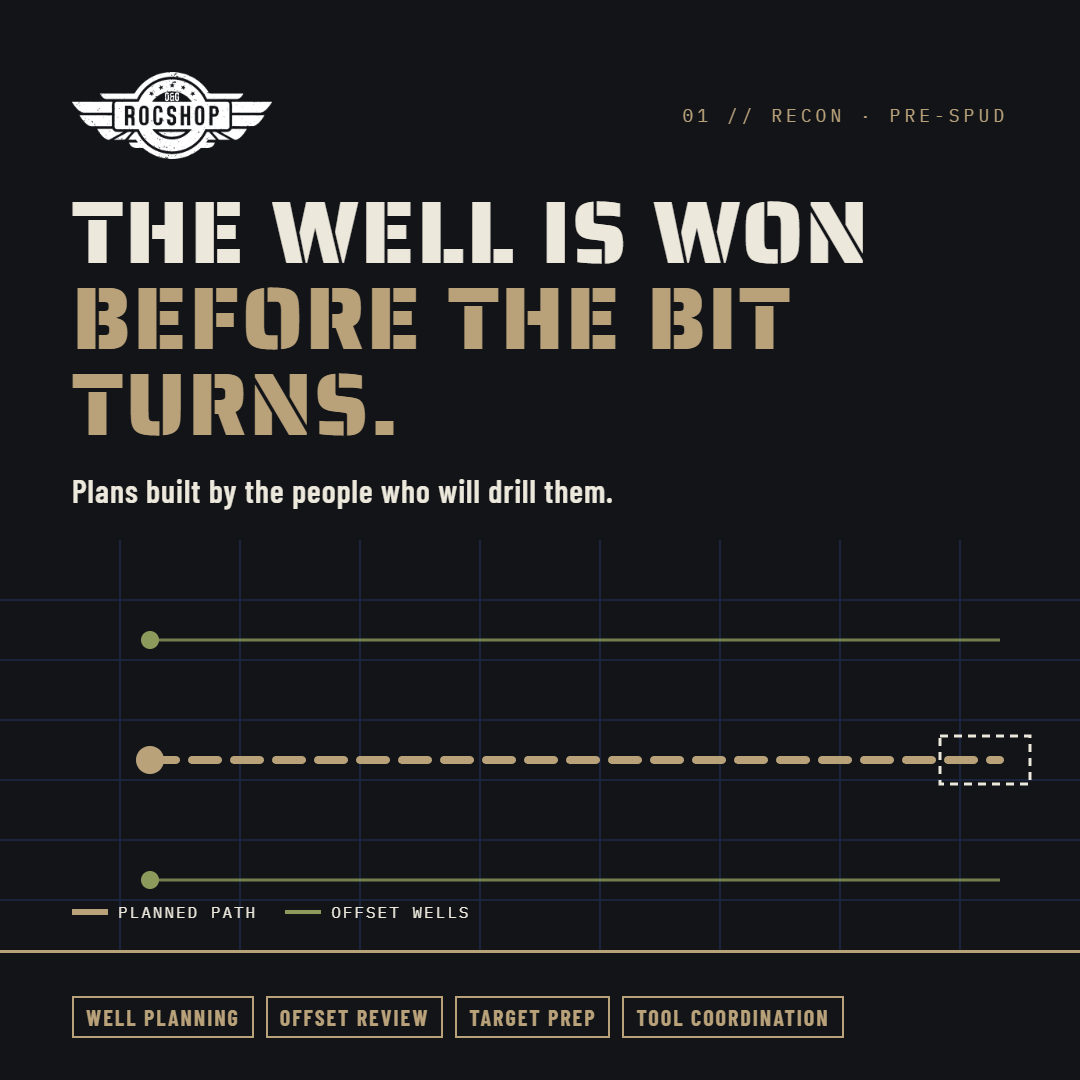
The well is won or lost before the bit turns. We build the well plan with drillers in the room, review offset wells for what worked and what didn’t, and prepare the target and geology so the geosteerer knows the zone before the lateral starts. We also line up the right RSS and motor setup for the job.

02 · Overwatch
A dedicated ROC team watches your wells around the clock. We provide remote directional oversight and geosteering with surveys, drilling parameters and geology on one screen. Every rig and every tour follows the same steering standard, and written handovers mean nothing gets lost at shift change.
03 · QRF
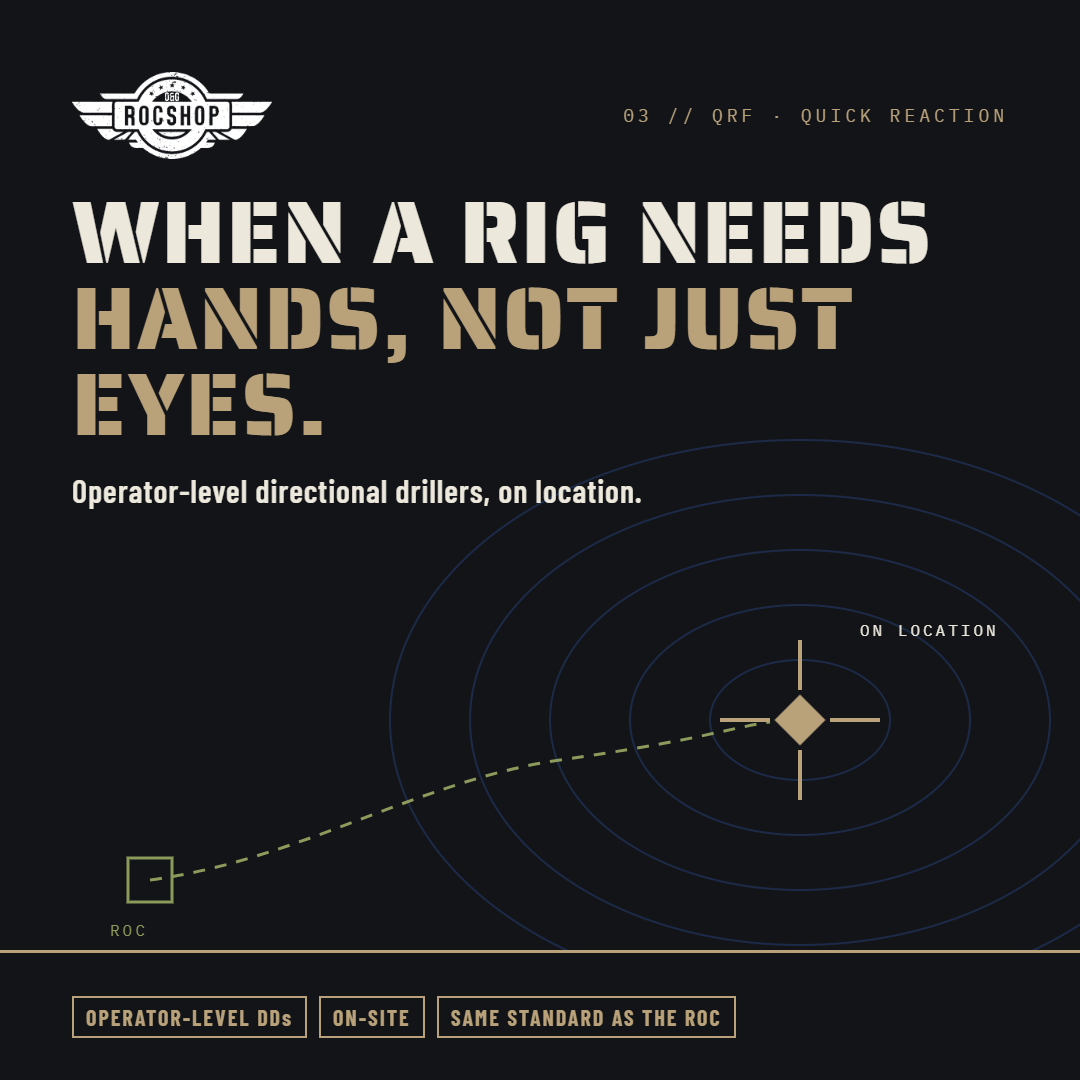
Some jobs need hands on location, not just eyes. Our QRF hands are operator-level directional drillers who have worked for E&P operators. They know what the company man needs and why the plan says what it says, and they drill to the same standard as the ROC.
04 · Command
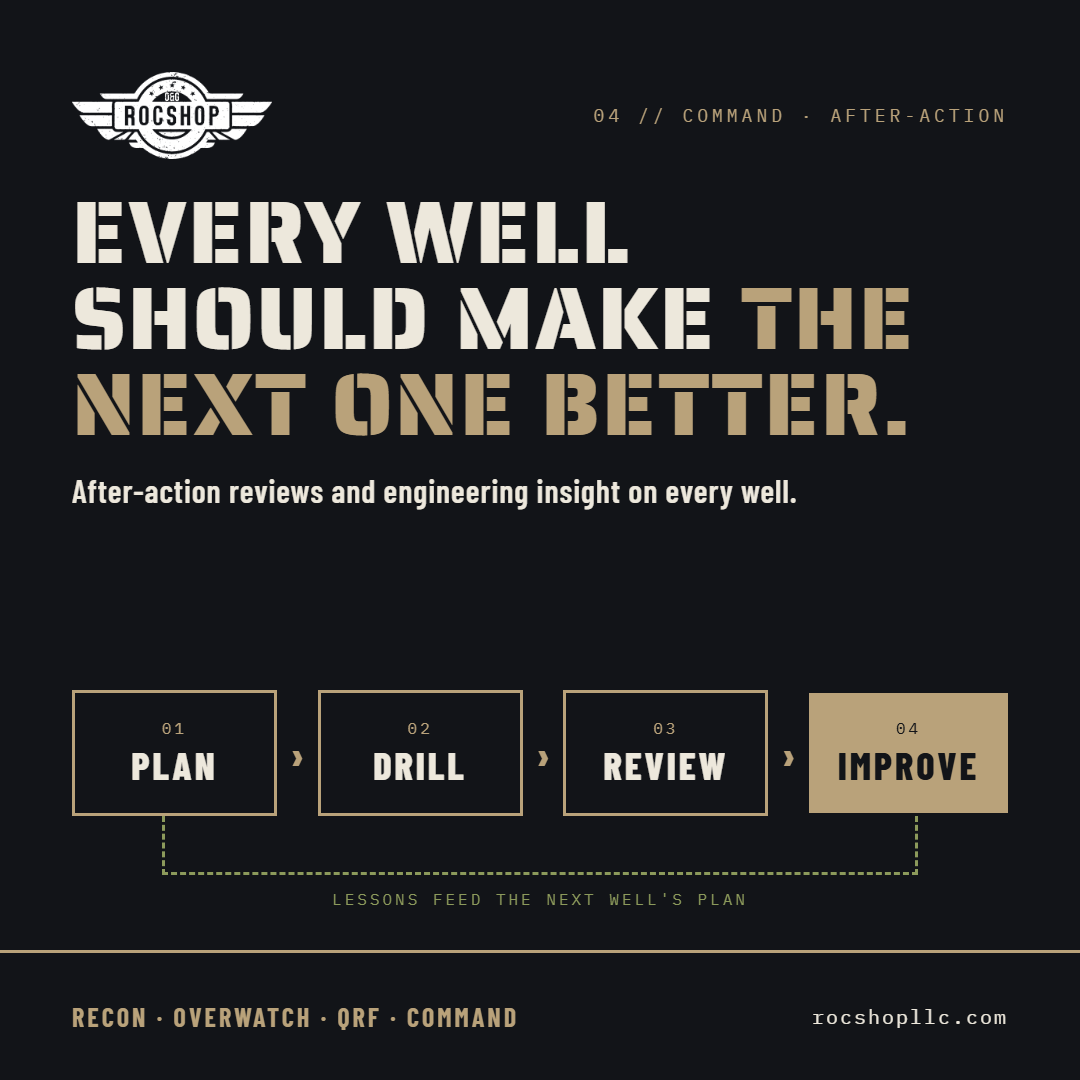
Every well should make the next one better. After each well we run an after-action review with engineering insights: what happened, why, and what to change. Those lessons go straight into the next well plan.